


In the post-pandemic economic landscape, a profound behavioral shift is reshaping the global home goods market. Faced with persistent inflation and soaring service costs, consumers are not stopping their spending—they are relocating it. The era of frequent, casual dining out is receding, replaced by a new era of intentional “Home Hospitality.”
This transformation represents a massive sourcing opportunity for manufacturers and suppliers. As consumers retreat from $150 restaurant bills to invest in $300 espresso machines and $100 artisanal dinner sets, they are effectively transferring their dining budget from the service economy to the goods economy. This phenomenon, known as the “Great Dine-In,” is driving sustained demand for premium kitchen appliances, aesthetic tableware, and sophisticated home bar equipment.
The Economics of "Affordable Luxury": Why Inflation Drives Upgrades
The primary driver of this market shift is economic, rooted in the widening disparity between the cost of dining out and cooking at home. Recent data indicates that while inflation for food-at-home has begun to stabilize, rising just 1.1% YoY in late 2024, the cost of dining out continues to climb aggressively, up 3.8% YoY. This price disparity has created a “value gap”: consumers increasingly view restaurant dining—particularly mid-tier casual dining—as poor value for money compared to the quality they can achieve at home.
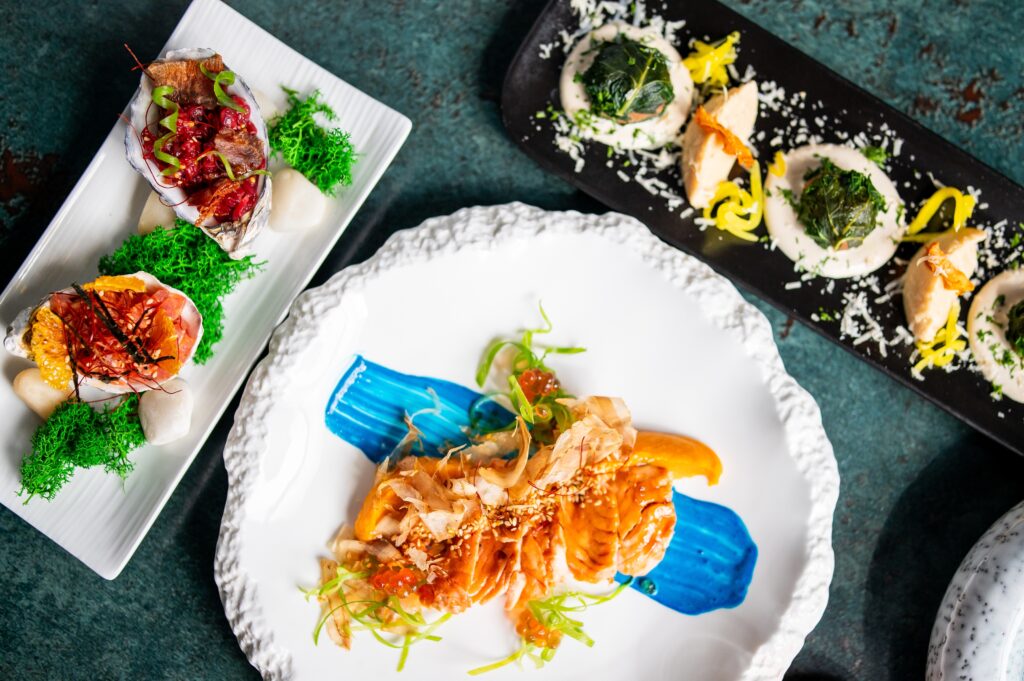
This economic reality fuels the “Affordable Luxury” psychology. In the world of consumer goods, “luxury” is often associated with high price points, but “affordable luxury” allows consumers to access premium experiences through smaller, attainable investments. A consumer who balks at a $20 cocktail in a bar is surprisingly willing to invest $50 in a premium mixology kit because the long-term mathematics work in their favor. It functions as a “micro-reward”—a daily moment of luxury (a café-quality latte, a perfectly plated dinner) that relieves economic stress without breaking the bank.
Research into luxury consumption confirms that over 80% of affluent consumers view their selection of luxury kitchen appliances as a “rational” choice rather than a guilty indulgence. They justify these purchases as investments in their home asset and their personal well-being. For suppliers, this means the mid-to-premium segment is expanding. Professional buyers are not looking for the cheapest utility items; they are sourcing products that promise an experience. The market for kitchenware is projected to grow from $71.13 billion in 2025 to $94.55 billion by 2034, largely driven by this demand for smarter, more sustainable, and higher-quality tools.
The Visual Currency: Sourcing for the "Mood" Economy
Beyond economics, a powerful social driver is reshaping product requirements: Visual Currency. In the digital age, the dinner table is a stage. A staggering 70% of consumers admit that social media content influences their purchasing decisions, and for younger generations (Gen Z and Millennials), the aesthetics of food and dining are inextricably linked to identity.
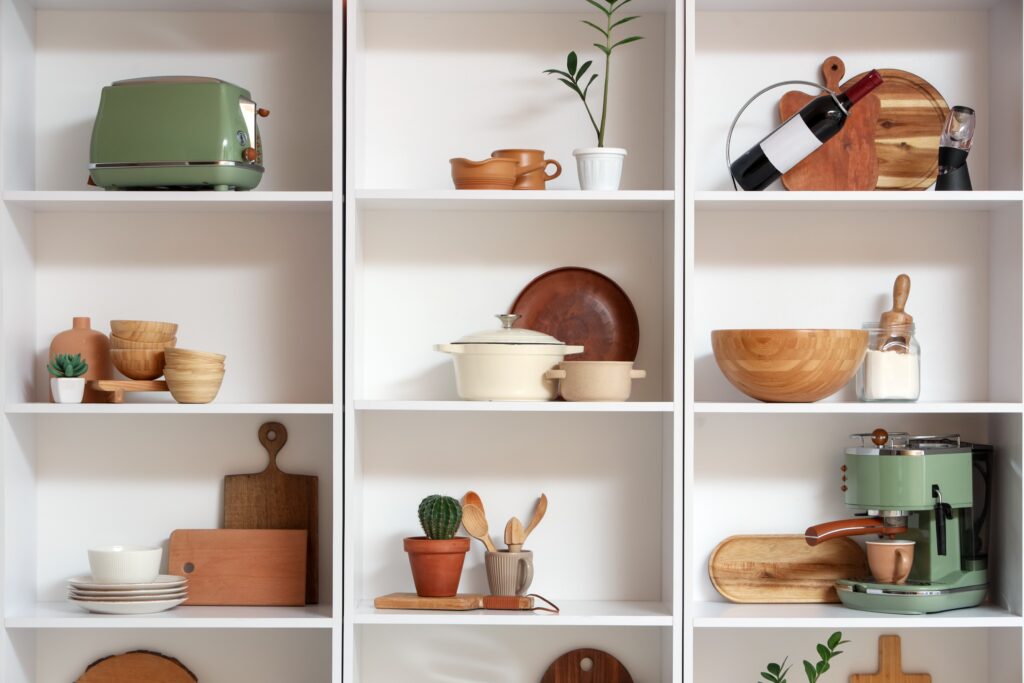
This has birthed the “Mood Economy,” where demographics prioritize aesthetics, texture, and “vibe” over pure utility. A set of plates is no longer just for eating; it is a backdrop for sharing content. This trend is further amplified by interior design shifts, specifically the popularity of open shelving in modern kitchens. As homeowners remove cabinet doors to display their ware, everyday items like plates, glasses, and jars become permanent decor fixtures.
This visibility creates a sourcing requirement for “photogenic” living. Professional buyers are hunting for unique matte finishes, organic shapes, and tactile materials that stand out on a digital feed. Uniformity is out; curation is in. The rise of social media discovery means that 77% of Gen Z consumers find dining trends through social media platforms, creating a direct pipeline from viral aesthetics to retail demand. Suppliers who can deliver “feed-ready” packaging and product designs are positioned to capture this younger, influence-driven demographic.
The Countertop Trophy (Small Kitchen Appliances)
The small kitchen appliance market is evolving from utilitarian tools to “Countertop Trophies”—devices designed to be displayed, not hidden. The global small kitchen appliances market was valued at $29.09 billion in 2024 and is projected to reach $40.90 billion by 2030, growing at a healthy CAGR of 5.9%. Within this growth, specific high-performance categories are outperforming the average.
Specialty Coffee: The Home Barista Boom
The strongest signal of the “Great Dine-In” is the explosion of the home espresso market. As coffee shop prices rise, consumers are “insourcing” their caffeine habits to maintain their daily ritual without the daily cost. The home espresso machine market is projected to reach $3.2 billion by 2034, growing at a rapid CAGR of 9.8%.
Professional buyers are seeking machines that offer premium specifications—high-pressure pumps, precise temperature control, and steam wands—wrapped in compact, aesthetic designs suitable for modern apartments. This is no longer about a quick caffeine fix; it is about the craft of coffee. Suppliers offering “barista-grade” tools (tampers, milk jugs, precision scales) alongside machines are seeing increased order volumes as retailers build out complete coffee ecosystems.
Gourmet Air Frying & Smart Cooking
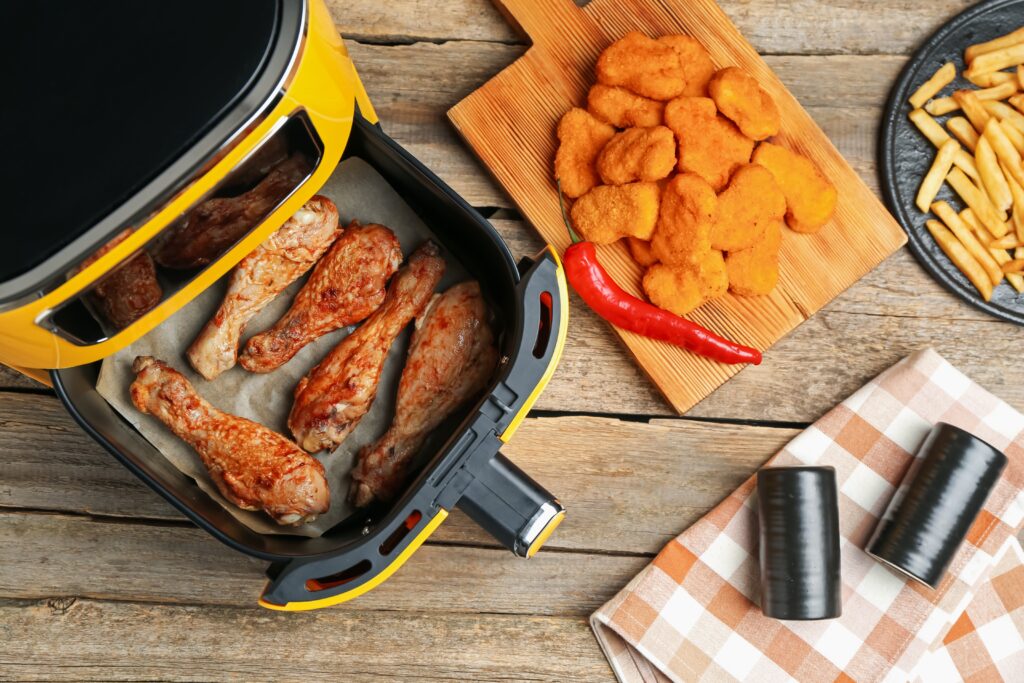
Similarly, the air fryer has graduated from a novelty to a kitchen staple. The global air fryer market is forecast to grow from $1.4 billion in 2024 to $2.9 billion by 2034, with a CAGR of 7.8%. However, the sourcing demand is shifting. The market is moving away from basic plastic units toward “gourmet” multi-functional units that bake, roast, and dehydrate, offering health-conscious consumers a way to replicate restaurant textures without the oil.
Furthermore, the Smart Kitchen Appliance sector is experiencing explosive growth, with a projected CAGR of 36.2% through 2033. This indicates a massive appetite for connected devices that offer convenience and precision. Consumers want appliances that can be controlled via smartphone, offer recipe integration, and fit seamless into a smart home ecosystem.
Supplier Insight: Retail buyers are hunting for high-performance specs combined with “Lifestyle” design (retro looks, matte pastels, premium metals). If your appliance looks good enough to leave on the counter 24/7, it wins.
The Visual Feast (Tableware & Ceramics)
If appliances are the engine of the home restaurant, tableware is the stage. The global tableware market is projected to grow from $15.6 billion in 2025 to $23.8 billion by 2035, driven by a distinct shift away from standard white sets toward “Artisan” aesthetics.
The Artisanal Ceramic Shift
The dominant trend in 2026 sourcing is the artisanal look. Ceramic tableware is the leading category, expected to account for 52.7% of the market by 2025. Professional buyers are moving away from uniform industrial porcelain toward stoneware with reactive glazes, organic asymmetrical shapes, and matte textures that convey a hand-made, artisanal feel.
This aesthetic shift aligns with the “Open Shelving” trend mentioned earlier. Because these items are always visible, they must serve as decor. The artisanal style allows for mix-and-match collections, enabling consumers to demonstrate their taste and creativity by purchasing individual statement pieces rather than committing to large, uniform sets.
Mood Glassware
Complementing ceramics is the rise of colored and textured glassware. Retro-inspired amber, green, and pink glass with fluted textures adds instant “mood lighting” to a table setting, satisfying the consumer demand for photogenic dining experiences. This category is particularly strong among younger consumers who use glassware to inject color and personality into rental spaces where they cannot paint walls or change fixtures.
Supplier Insight: Uniformity is out. Retailers are looking for “mix and match” collections that allow consumers to curate their own unique look. Efficacy remains key: durability is non-negotiable. Glazes that survive daily dishwasher cycles while maintaining their artisanal finish are the gold standard for professional buyers.

The Home Bar & Social Hub (Barware)
The revival of the ‘Cocktail Hour’ has transformed barware into a year-round essential category. The global barware market is expected to reach $11.5 billion by 2035, growing at a CAGR of 4.9%. This growth is driven not just by alcohol consumption, but by the ‘ritual’ of preparation.
The Ritual of Mixology
As bar prices skyrocket, consumers are learning mixology at home, driving demand for premium tools. The “glassware” segment alone is projected to account for 39.8% of the total barware market revenue in 2025, driven by demand for specialized shapes like crystal whiskey tumblers and coupe glasses that enhance the drinking experience.
But the hardware is equally important. Consumers investing in $50-80 bottles of spirits want tools that respect the ingredients. This creates demand for weighted shakers, precise jiggers, and crystal mixing glasses.
Aesthetic Tools & Tech
Beyond glass, the demand for “Countertop-Worthy” tools is surging. Mixology kits in premium finishes—copper, brushed gold, matte black—are sourced not just as tools but as decor. Furthermore, “Wine Tech” is a growing sub-sector, with electric openers and preservation systems appealing to the “tech-enabled” host who values precision and convenience.

The Sourcing Checklist: What Buyers Need From You
To capture orders in this “Home Hospitality” boom, suppliers must align with specific buyer requirements that go beyond price:
Visual Identity & Storytelling
Professional buyers aren’t just sourcing a plate; they are sourcing a “look.” Suppliers must demonstrate how their products fit into a lifestyle narrative (e.g., “Nordic Breakfast,” “Mediterranean Dinner,” or “Modern Minimalist”) through high-quality product photography. The ability to visualize the product in a home setting is often the deciding factor for professional buyers planning their seasonal displays.
Value & Efficacy
Smart spending means demanding durability. Consumers investing in “Affordable Luxury” expect these items to last. Suppliers must emphasize material quality—motor life in appliances (e.g., citing cycle testing results), resistance to common wear patterns in ceramics and dinnerware from daily use, and finish durability in barware (PVD coatings vs. cheap painting).
Sustainability Credentials
With 62% of consumers preferring sustainable kitchenware, eco-credentials are a powerful differentiator. Using recycled materials, plastic-free packaging, or non-toxic ceramic coatings can be the “tipping point” for a buyer choosing between two suppliers.
Compliance & Safety
Food Contact Safety certifications (FDA for the US, LFGB for Europe) remain the non-negotiable baseline for chemical safety. Suppliers must have these test reports ready before meeting with professional buyers. Additionally, for items intended for heat exposure (platters, baking dishes, serving ware), certifications for Thermal Shock resistance and Microwave Safety ensure the product will not crack under temperature changes. These secondary safety reports are increasingly required by buyers, particularly in Western markets.
Originality
With the market flooded with basics, professional buyers are hunting for unique textures, glazes, and forms that stand out on a digital feed. Offering a unique proprietary finish or a patented handle design can secure exclusivity contracts.
Looking Ahead to 2026
The “Great Dine-In” is not a seasonal blip; it is a long-term lifestyle correction. As we look toward 2026, the separation between “home cooking” and “restaurant dining” will continue to blur. Consumers have tasted the quality they can achieve at home and are unlikely to revert to paying premiums for mediocre dining experiences.
For suppliers, this represents an unprecedented opportunity. Suppliers who position themselves now as partners in this “Home Hospitality” ecosystem—offering verified quality, trend-right aesthetics, and professional performance—will secure their place in the procurement strategies of major global retailers. The window to establish these partnerships is open, and the demand is waiting.
The shift is happening. Launch your business with us and enjoy the 70% off Welcome Offer today to capture the opportunities in the booming home hospitality market.
Market Size & Growth Data
Grand View Research, Future Market Insights, Statista Market Forecasts, Mordor Intelligence, TechSci Research
Consumer Behavior & Purchasing Decisions
eMarketer Consumer Insights, Forrester Research, McKinsey Consumer Studies, Harvard Business Review Consumer Psychology, Ingredion Global Consumer Research
Inflation & Economic Data
U.S. Bureau of Labor Statistics, Federal Reserve Economic Data, Consumer Price Index Reports, eMarketer Dining Inflation Analysis
Social Media Impact & Digital Trends
Pew Research Center Social Media Studies, Frontiers in Communication Research, SCIRP Journal of Consumer Behavior, TikTok/Instagram Industry Reports, Statista Social Media Influence Statistics
Home Appliances & Kitchen Market
Statista Household Appliances, Grand View Research Small Kitchen Appliances, GMInsights Air Fryer Market, ForInsights Home Espresso Machines, TechSci Smart Kitchen Appliances
Tableware & Ceramics Market
Future Market Insights Tableware Report, Mordor Intelligence Ceramic Tableware, Grand View Research Ceramic Products, MarketResearchFuture Tableware Analysis
Barware & Home Entertainment
Future Market Insights Barware Market, TechSci Research Barware Analysis, GII Research Barware Industry, Mordor Intelligence Beverage Equipment
Interior Design & Home Trends
Ideal Home Design Trends, Elle Decor Kitchen Insights, Architectural Digest Shelving Trends, Home Improvement Research
Sustainability & Eco-Credentials
McKinsey Sustainability Consumer Report, Nielsen Green Product Study, Sustainable Brands Research, Ellen MacArthur Foundation Circular Economy
Food Safety & Compliance
FDA Food Contact Substance Regulations, LFGB European Food Safety Standards, NSF International Certification, ISO Food Safety Standards