

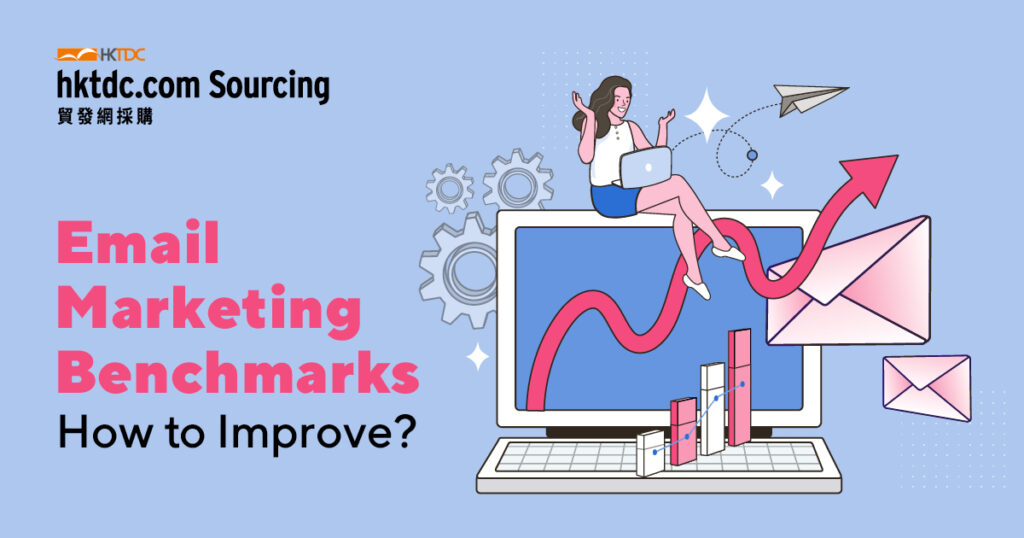
Email remains one of the most reliable ways to reach your customers among various digital marketing channels. However, performance expectations have shifted over the past years, with privacy changes, new inbox behaviors, and smarter engagement strategies all influencing what “good” looks like now.
This article takes you through the latest engagement benchmarks, and what market changes mean for your strategy. You’ll see where your performance sits against your industry and learn practical steps that help you improve each core metric.
Read More:
How to Write and Send Follow Up Emails
Where the Email Benchmark Data Comes From
Before exploring the benchmarks, it helps to understand how this year’s email engagement data was collected – and why it offers a reliable view of market performance.
The benchmarks in this article come from the DMA Email Benchmarking Report 2025, produced in partnership with 7 major email service providers. The dataset covers more than 442 billion emails sent in 2024, spanning B2B, B2C, and multiple industry sectors. Each provider contributed anonymized performance data, which the DMA aggregated to create overall industry averages.
Because the report draws on a broad mix of brands, volumes, and marketing programs, the benchmarks give you a trustworthy picture of how the email channel is performing across the market. The DMA also removes extreme outliers to ensure the year-over-year (YoY) trends remain consistent and comparable.
1. Open Rate
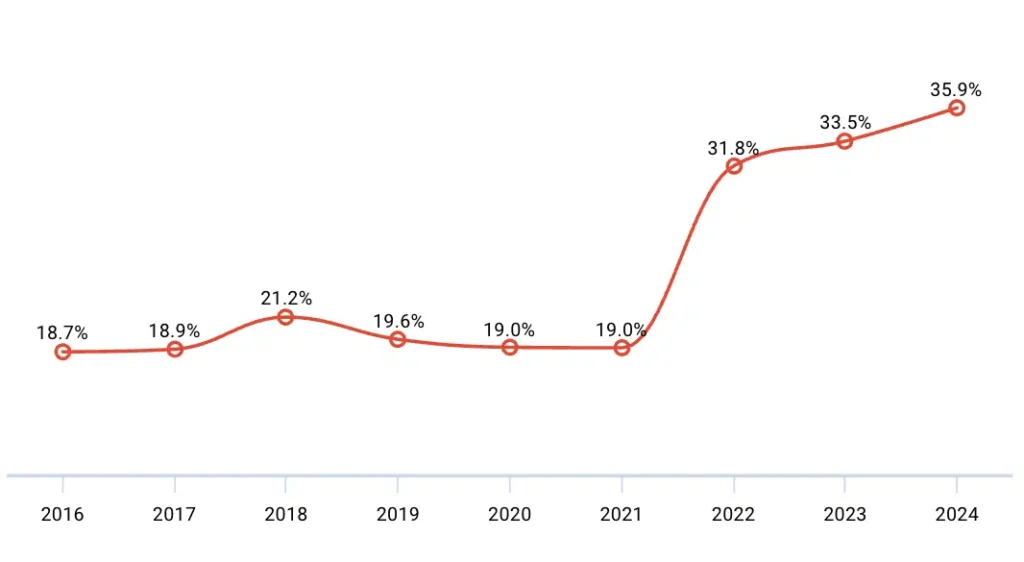
Your open rate shows how effectively your emails capture attention in the inbox. While Mail Privacy Protection has changed the way opens are recorded, year-over-year shifts still reveal clear trends in customer interest. When open rates rise across an industry, it often reflects stronger content relevance, smarter timing, or improved segmentation.
Open rate changes by industry
Sector | 2023 | 2024 | Change |
B2B | 33.6% | 37.4% | ▲ +3.8 pts |
B2C | 36.3% | 40.0% | ▲ +3.7 pts |
Utilities | 42.9% | 52.4% | ▲ +9.5 pts |
Retail | 33.7% | 38.2% | ▲ +4.5 pts |
Travel | 33.5% | 32.8% | ▼ –0.7 pts |
Most industries saw a clear rise in open rates this year. Utilities experienced the largest increase, which suggests these messages are reaching customers at moments when information is timely and valuable. B2B and B2C also show healthy growth, indicating stronger alignment between subject lines, timing, and customer expectations. Travel is the only sector with a slight decline, which could signal shifting customer priorities or seasonal variation.
How to improve your open rate
- Use predictive send-time technology to reach customers when they are most likely to notice your message
- Map your email cadence to lifecycle moments such as onboarding, replenishment, renewal, or loyalty milestones
- Reduce volume where fatigue is likely and focus instead on higher-value triggers like welcome journeys, post-purchase follow-ups, and loyalty point expiry alerts
- Test variations of subject lines, preview text, and sender names to see what builds trust
- Highlight outcomes or value rather than slogans, especially for B2B and Utilities audiences
2. Click Rate
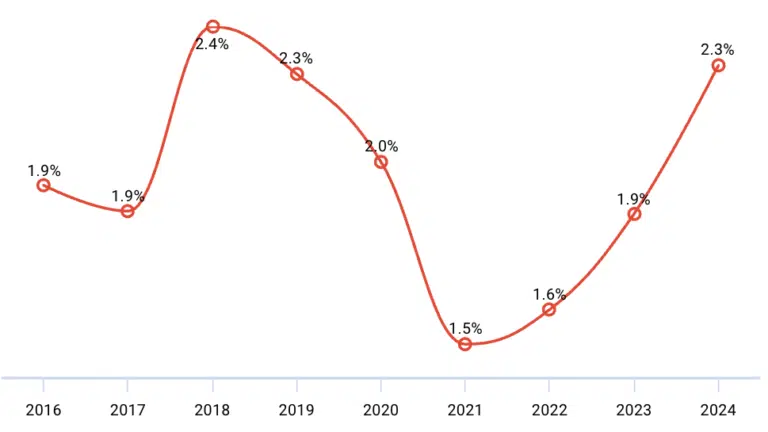
Your click rate reflects how many subscribers take meaningful action inside your email. It’s one of the strongest indicators of interest because it measures what customers choose to engage with rather than what they simply view. Year-over-year shifts help you understand whether your content is becoming more compelling or whether your audience is losing interest.
Click rate changes by industry
Sector | 2023 | 2024 | Change |
B2B | 1.4% | 2.9% | ▲ +1.5 pts |
B2C | 1.7% | 2.1% | ▲ +0.4 pts |
Utilities | 5.4% | 5.9% | ▲ +0.5 pts |
Retail | 1.2% | 2.0% | ▲ +0.8 pts |
Travel | 1.6% | 1.4% | ▼ –0.2 pts |
Click performance improved in 4 out of 5 sectors this year. B2B saw the most significant lift, which points to stronger content relevance and more targeted communications. Retail also achieved a notable recovery after lower click performance in 2023. Utilities continue to exceed every other industry by a wide margin, showing that practical, high-value content encourages deeper engagement. Travel is the only sector showing a small decline, which reinforces the importance of timing and audience intent in this space.
How to improve your click rate
- Use a single, primary call-to-action (CTA) so customers understand the most important next step
- Feature products or content blocks that reflect each customer’s behavior, such as recently viewed items or ongoing interests
- Add urgency only when it aligns with customer intent, such as low stock, expiring offers, or expiring loyalty points
- Trigger messages based on real behavior, including browse abandonment, price drop alerts, back-in-stock notifications, and replenishment cycles
- Use predictive timing to reach customers when they are most likely to engage
3. Click to Open (CTO) Rate
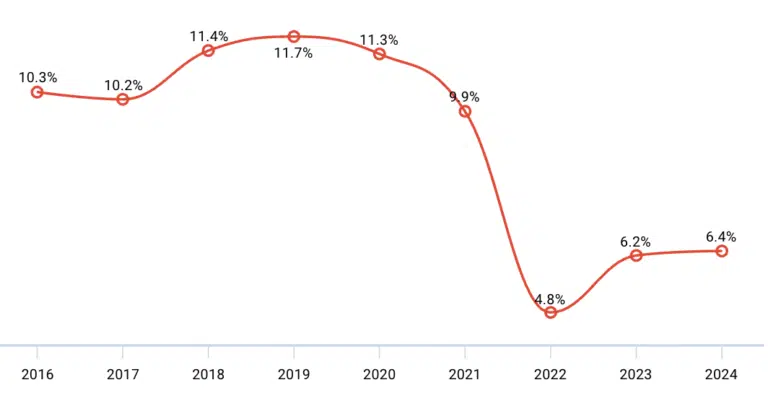
Your click-to-open rate shows how relevant your content is for the subscribers who choose to open your email. It’s one of the clearest indicators of message quality because it reflects how well your subject line and email content work together. When CTO improves, it usually means your content is more aligned with what customers expect and value.
Click-to-open rate changes by industry
Sector | 2023 | 2024 | Change |
B2B | 4.8% | 13.0% | ▲ +8.2 pts |
B2C | 4.3% | 5.5% | ▲ +1.2 pts |
Utilities | 12.0% | 11.2% | ▼ –0.8 pts |
Retail | 3.5% | 5.3% | ▲ +1.8 pts |
Travel | 4.8% | 4.2% | ▼ –0.6 pts |
B2B saw the most dramatic improvement of any metric across all industries this year. A rise of more than 8 points suggests better personalization, better content alignment, and more targeted messaging strategies. Retail and B2C also show meaningful gains in content relevance. Utilities remain strong despite a small decrease, and Travel saw a minor decline that matches its drop in opens and clicks. Together, these patterns highlight the value of sending fewer, more targeted emails that speak to specific customer needs.
How to improve your click-to-open rate
- Ensure your email delivers on the promise your subject line sets
- Use consistent language between the inbox preview and the opening content block
- Introduce the primary action early so subscribers do not have to search for it
- Use personalized content blocks based on lifecycle stage, purchase behavior, or recent actions
- Keep your visual hierarchy simple so readers can scan and understand your message quickly
What These Email Engagement Trends Tell Us
Together, these benchmark shifts reveal how customer expectations are changing and where you can make the biggest improvements to strengthen engagement this year.
Stronger content relevance is driving higher engagement
Rising open and click rates across most sectors show that customers respond when emails feel timely, personal, and valuable. When your messages focus on relevance instead of volume, engagement naturally improves.
B2B programs benefit the most from deeper segmentation
B2B saw one of the strongest increases in click-to-open rate this year, rising more than 8 points. This kind of improvement rarely happens by accident. It suggests that B2B marketers are using more granular segmentation, clearer value-led messaging, and content that reflects specific stages in a longer buying cycle. As inbox competition increases, this shift toward targeted communication becomes essential for maintaining engagement.
Utilities highlight the value of timely, high-intent communication
No sector saw a bigger increase in open rate than Utilities. These results often come from messages tied to service updates, usage alerts, or time-sensitive information. Because these emails provide immediate value, subscribers are more likely to open and act. This trend reinforces a consistent theme across the data: customers engage more deeply when your emails help them make a decision or solve a problem right away.
Expand Your Global Reach with hktdc.com Sourcing
Other than engaging customers with effective email marketing, expanding your B2B customer base is also vital to sustain your business growth. It is of great importance to choose a trusted e-commerce platform like hktdc.com Sourcing that spans across international markets for decades.
Start connecting with global sourcing peers on our e-Marketplace by becoming our supplier:
This article is originally published by Emarsys:

Emarsys, an SAP company, is the omnichannel customer engagement platform that empowers marketers to build, launch, and scale personalized, cross-channel campaigns that drive business outcomes. We partner with more than 1,500 companies from global enterprises to fast-moving mid-market brands across industries.
Email Marketing FAQ
1. What should an effective marketing email include?
A good email typically has:
- A clear subject line
- Personalized content
- Mobile-friendly design
- Engaging visuals
- A strong call-to-action (CTA)
- Easy unsubscribe option
2. What are the best practices for designing an email?
- Keep it simple and visually attractive
- Stick to your brand’s color and tone
- Use short paragraphs and bullet points
- Optimize for mobile devices
- Always test before sending (A/B testing helps!)
3. Does email marketing still work in 2026?
Yes! Despite the rise of social media, email remains one of the most effective marketing channels. It’s personal, measurable, and adaptable.